Final year project · 2025–26
Dus Pattay
A twenty-minute tablet game that flags children at risk of ADHD, built for Pakistani schools with no specialist in the room.
- 8psychologists & psychiatrists interviewed
- ~20 minon an ordinary tablet
- 8–12year-olds, no reading needed
- μstiming on every tap
The problem
Pakistan has no cost-effective, objective, culturally adapted way to screen children for ADHD. Diagnosis rests on rating scales filled in by parents, teachers and clinicians. They vary from clinician to clinician, are mostly in English, and under-recognise girls, whose inattention is quieter. It takes two to three visits in private practice and four to eight in institutions, and most children arrive only after their parents have cycled through paediatricians first.
Computerised attention tests exist, but they are monotonous for children, ignore physical movement and run in lab settings. So we asked:
How can a low-cost, time-efficient game, played at school, objectively flag children aged 8–12 who are at risk of ADHD?
Research
talk to the people who diagnose
We compiled 48 psychologists and psychiatrists in Lahore from online directories, verified each one (many listings were wrong), and phoned them for consent. We ran semi-structured interviews with eight practitioners, covering referral routes, diagnostic steps, which rating scales exist in Urdu, teacher input, gender differences and stigma.
- Diagnosis follows one path: history-taking, behavioural observation, rating scales, DSM-5 criteria, then a treatment plan.
- Schools rarely refer. We visited three schools to test feasibility and met real institutional-trust barriers, even with a signed university letter.
- Parents don’t know what to look for. Low awareness was the biggest cause of delay, which became the second half of the project.
We also spent two full days observing at a child-development screening camp. With a clinical psychologist who specialises in ADHD, we agreed the requirements: about twenty minutes of sustained attention, targets among non-targets, visual and auditory distractors like a real classroom, and a “freeze” stage where any tap counts as impulsivity.
Design decisions
Fun to start, plain when it counts
We borrowed the engagement loop of EndeavorRx (rewards, a world to explore) and the measurement rigour of MOXO-CPT, then stripped the gamification back out during measurement phases: no music, no extra visuals. Too much fun skews the results, and hyperfocus can mask symptoms.
No words on screen
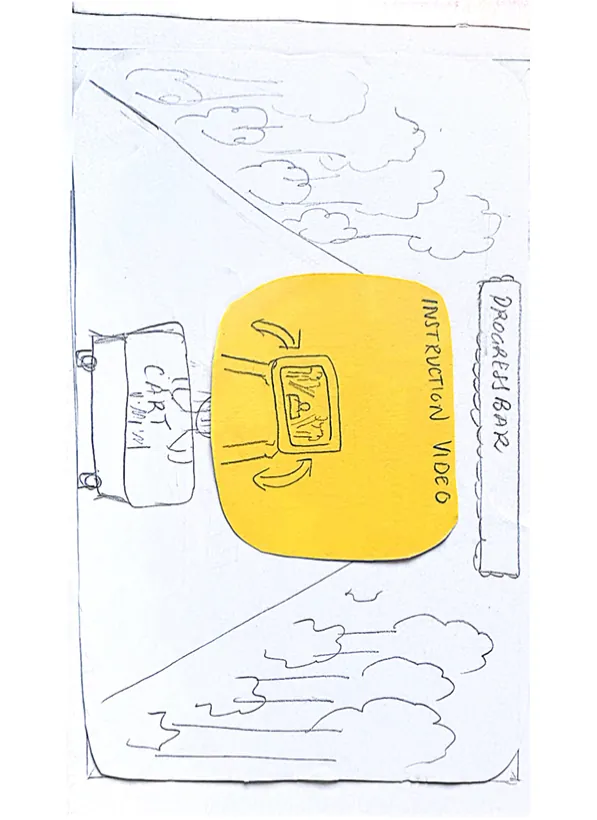
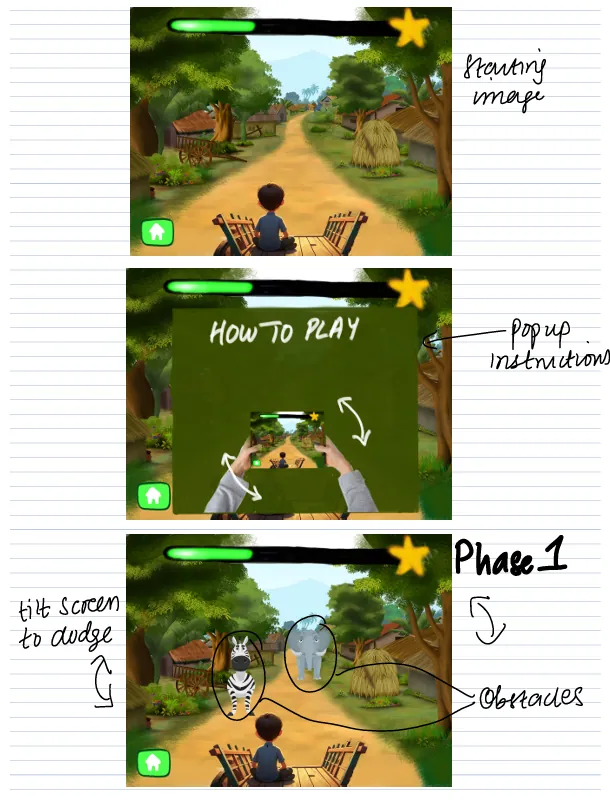
Up to 40% of children with ADHD also have reading difficulties, so the interface is text-free and every phase opens with a short tutorial video.
Cheap hardware only
No eye-tracking. Touch-trajectory jitter measures motor overflow and the tablet’s gyroscope picks up fidgeting, so it runs on any consumer tablet a school already has.
A name from a nursery rhyme
Dus Pattay (“ten leaves”) comes from a Pakistani children’s rhyme. It lowers test anxiety, and each leaf is a phase.
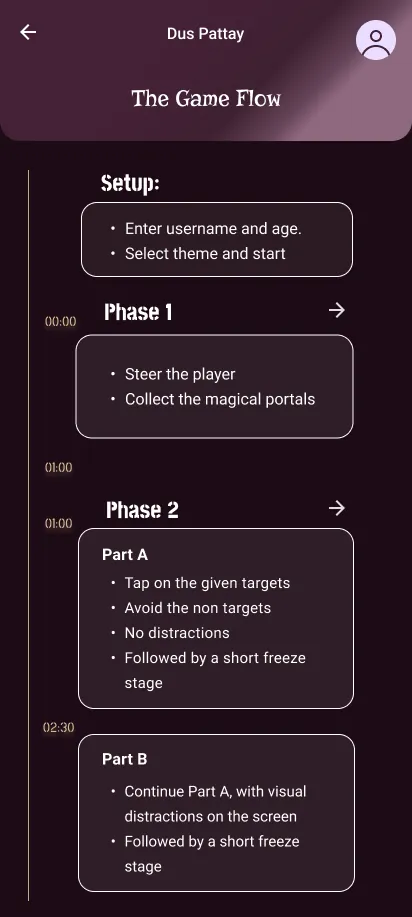
| Phase | What the child does | What it measures |
|---|---|---|
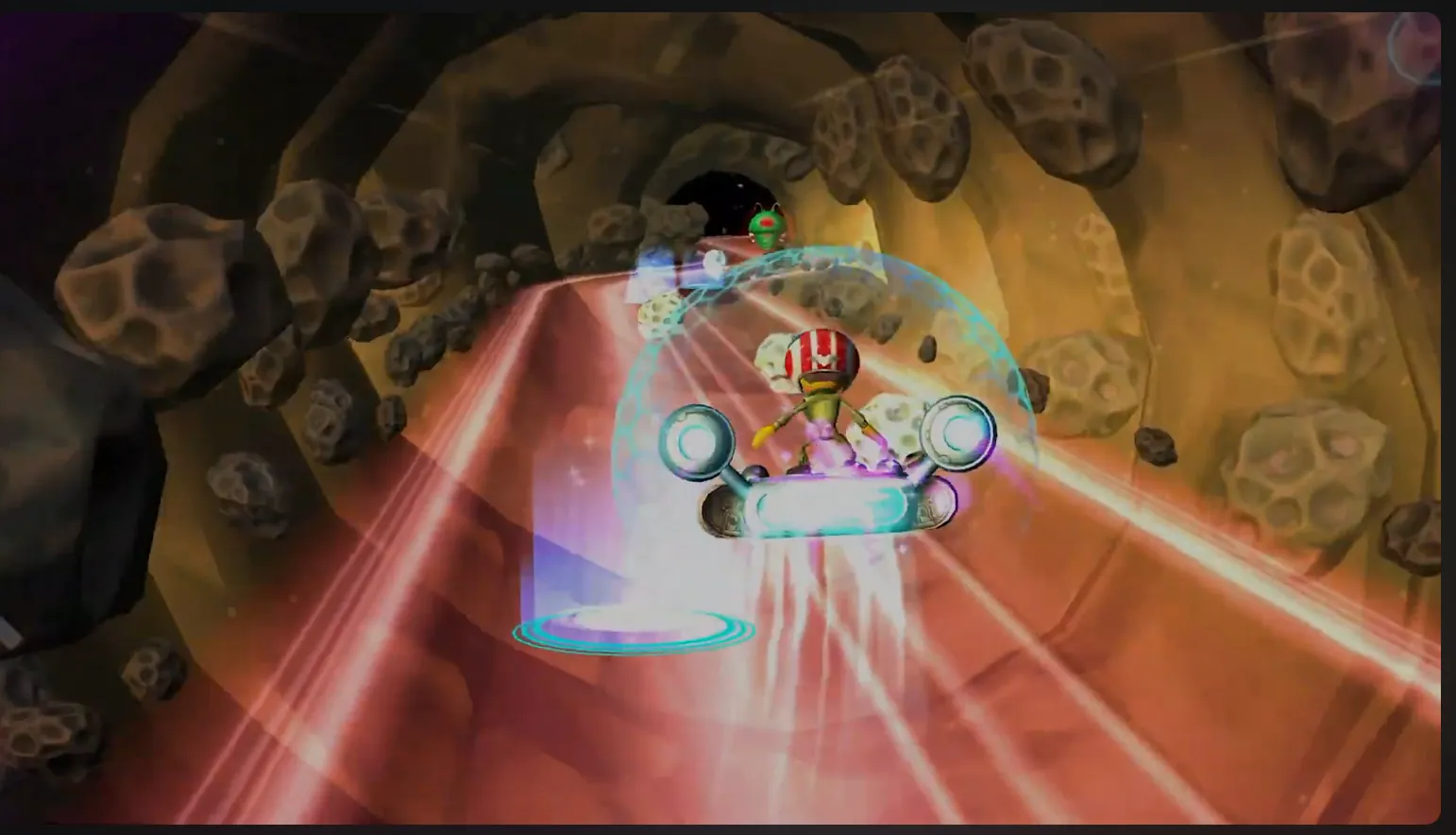
| 1 · Attention baseline | Tilts the tablet to steer and collect glowing portals (~1 min) | Correct collections |
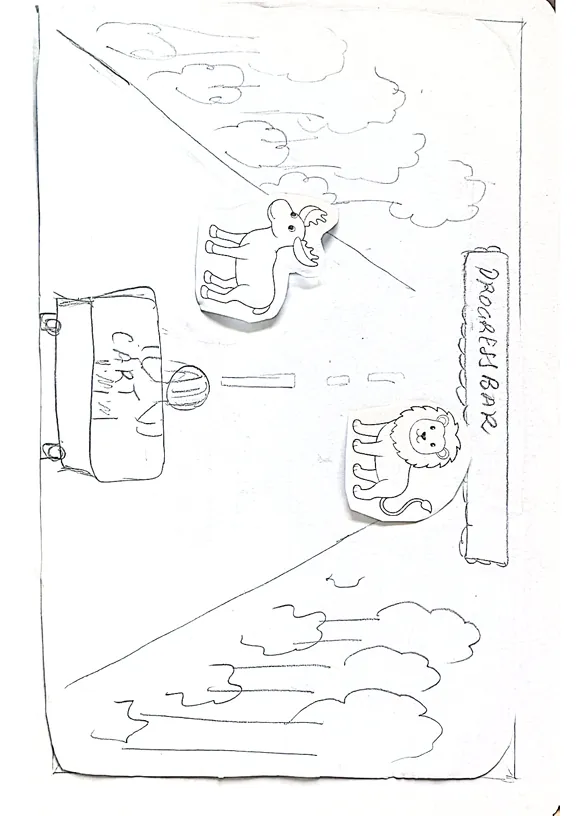
| 2 · Hyperactivity & impulsivity | Taps targets, ignores five kinds of non-target, with sound and visual distractors (~7.5 min) | Omissions, commissions, reaction time, extra taps, motor jitter |
| 3 · Multitasking & memory | Steers and taps at once; double-taps the golden cart when it appears (~8 min) | All of the above, plus working memory |
| 4 · Time & fine motor | Colours a picture to match a reference before time runs out (~5 min) | Colour accuracy, staying inside lines, % complete |
Building it
I built the game in Unity as a single scene driven by a coroutine-based state machine, so phases, rests and pauses never reload the world. The colouring phase is a Texture2D painter written from scratch, with interpolation so strokes stay smooth however fast a small finger moves.
Every tap is buffered in memory and written to two timestamped CSVs on exit, so disk writes never add frame drops that would corrupt reaction times. A background sensor logs any tap that hits nothing as an “unnecessary tap”, a direct signal of impulsivity. The data is shaped for the next phase: training a Random Forest model on diagnosed and non-diagnosed children.
Khoj, the parents’ app
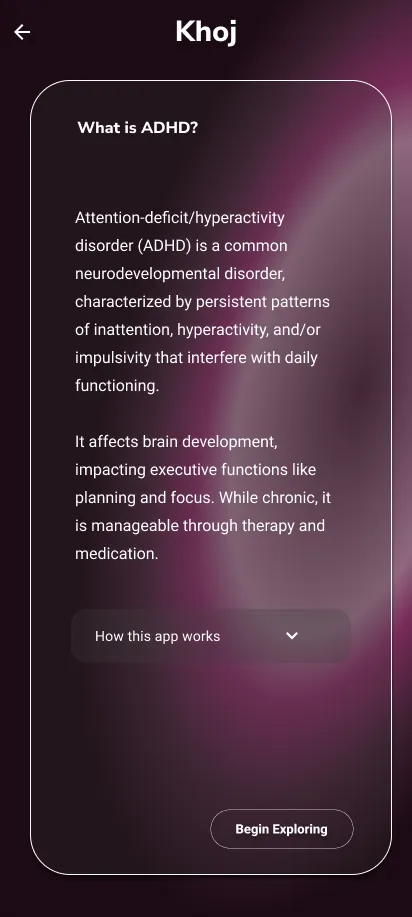
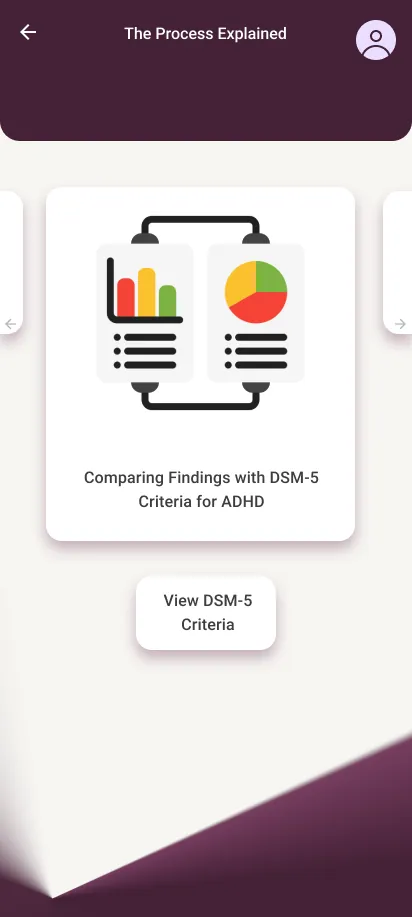
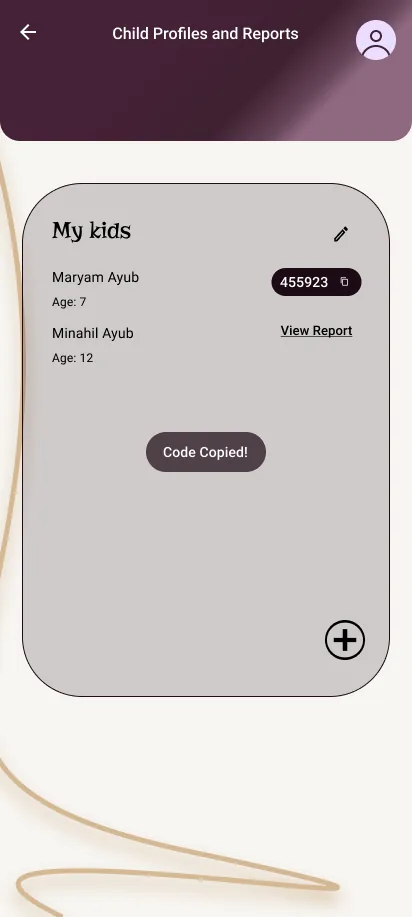
Because parental awareness was the biggest delay, the game lives inside Khoj, a mobile app we designed in Figma. It explains the Pakistani diagnosis process as swipeable illustrated flowcharts, turns DSM-5 symptoms into everyday behaviours, and holds each child’s profile and results. The palette is chosen for anxious parents: deep burgundy, cream, sage for yes and soft rose for no.
What came of it
Clinicians told us a pre-session report like this could replace an entire assessment visit.Feedback from practitioner interviews
The tool is a screening aid, not a diagnosis: it flags risk so a child reaches a clinician sooner. Next comes data collection with consenting families and schools, and training the model.